.
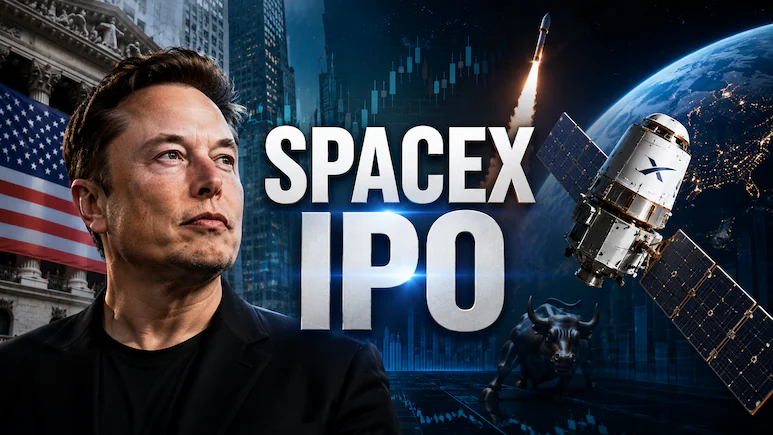
The planned public offering of shares in SpaceX is shaping up to be one of the most significant events in modern financial markets, offering ordinary investors their first opportunity to buy into Elon Musk’s space and technology empire.
The move comes as excitement surrounding the company reaches new heights, fueled by SpaceX’s groundbreaking achievements in reusable rocket technology and its ambitious plans for artificial intelligence, space-based infrastructure and interplanetary exploration.
Interest in the offering has surged among retail investors, with stockbrokers reporting strong demand ahead of trading, which is scheduled to begin on June 12. Industry analysts believe the listing could attract a new generation of investors eager to gain exposure to one of the world’s most closely watched private companies.
From Reusable Rockets to Wall Street
SpaceX captured global attention with a series of technological breakthroughs, including the successful recovery of its massive rocket boosters using the company’s “Mechazilla” catch system at its Texas launch facility.
Founder Elon Musk has described such achievements as critical steps toward making humanity a multiplanetary species, with long-term ambitions focused on establishing human settlements on the Moon and Mars.
The company’s mission statement reflects those goals, emphasizing the development of technologies that can extend human presence beyond Earth.
A Trillion-Dollar Bet on the Future
The proposed share sale values SpaceX at approximately $1.75 trillion, placing it among the world’s most valuable companies despite reporting losses estimated at nearly $5 billion last year.
While SpaceX is best known for its rocket launches and satellite operations, analysts say much of the valuation is tied to future growth expectations rather than current earnings.
Its Starlink satellite internet network has become a major revenue source and has played a significant role in global communications, particularly during conflicts such as the war in Ukraine. However, many experts estimate the company’s traditional space and communications businesses account for only a fraction of its overall valuation.
Instead, investors are increasingly betting on SpaceX’s artificial intelligence ambitions.
AI at the Centre of Growth Strategy
A key component of the company’s future plans involves artificial intelligence through Musk’s AI ventures and proposed space-based computing infrastructure.
According to company projections, AI-related services represent the overwhelming majority of SpaceX’s identified market opportunity, far exceeding the value of its aerospace operations.
The strategy envisions vast data-processing facilities powered by solar energy in space, alongside continued investments in advanced communications networks and deep-space exploration.
Supporters argue that Musk has repeatedly demonstrated an ability to transform ambitious ideas into commercially successful businesses, citing the rise of electric vehicle giant Tesla, Inc. as evidence.
Critics Question Valuation and Structure
Despite investor enthusiasm, some analysts remain skeptical about the company’s valuation and governance structure.
Critics argue that SpaceX’s lofty market value relies heavily on future projections rather than proven profitability. Questions have also been raised about the company’s diverse mix of businesses, ranging from rockets and satellites to artificial intelligence and social media-linked ventures.
Another concern is Musk’s control over the company. Although he owns less than half of SpaceX, enhanced voting rights effectively give him overwhelming influence over corporate decisions.
Some investors believe this concentration of power reduces shareholder influence and increases governance risks.
Echoes of the Dot-Com Era?
The SpaceX offering is expected to be the first in a wave of major public listings involving leading AI-focused companies.
Industry observers suggest that firms such as Anthropic and OpenAI could eventually follow a similar path, bringing trillions of dollars in new equity to public markets.
The prospect has sparked comparisons with the dot-com boom of the late 1990s, when investors poured money into fast-growing technology companies with uncertain paths to profitability.
However, analysts note that today’s market differs significantly due to the growing influence of index funds and institutional investors, which may help absorb large volumes of newly issued shares.
Musk’s Biggest Gamble Yet
For supporters, the SpaceX IPO represents an opportunity to invest in technologies that could redefine communications, transportation, artificial intelligence and space exploration.
For critics, it is a high-risk wager built largely on confidence in Musk’s ability to deliver on ambitious promises.
Either way, the public debut of SpaceX is expected to become a defining moment for both global financial markets and the rapidly evolving AI economy, with investors closely watching whether the company can justify one of the most ambitious valuations in corporate history.