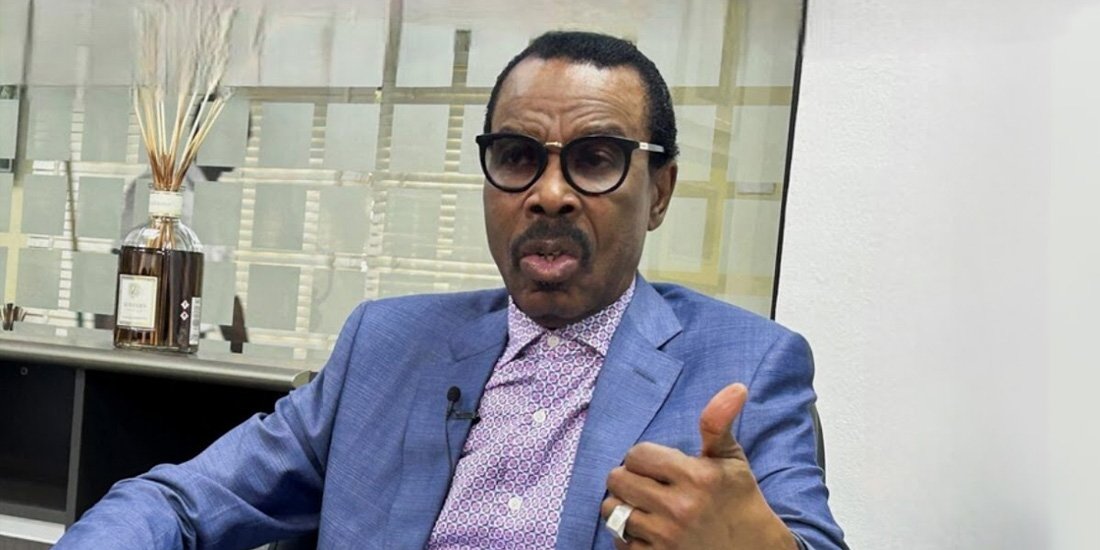
The Chief Executive Officer of Financial Derivatives Company, Mr. Bismarck Rewane, has said Nigeria recorded rising poverty and worsening insecurity even as gross domestic product grew during the first three years of President Bola Tinubu’s economic reform program.
Rewane summed up the period as a mixed bag of 15 percent cheers, 30 percent tears and 55 percent fears, in his June 2026 presentation at the LBS Breakfast Session titled “Three Years After Reform: Cheers, Fears and Tears.” He said GDP grew 3.89 percent in the first quarter of 2026, ahead of population growth of 2.1 percent but still below the potential rate of 4.0 percent.
He noted that S&P had upgraded Nigeria’s sovereign rating to “B” with a positive outlook, citing reform gains, a stable currency and the Dangote refinery, while the stock exchange had gained more than 50 percent, about 35 percentage points above inflation. He cautioned, however, that money illusion, where real values lag far behind nominal figures, posed a major threat to macroeconomic stability.
In real terms, Rewane said the dollar value of key indicators showed only modest improvement. Gross external reserves stood sharply higher at $49.95 billion, alongside debt of $110.97 billion and a debt service cost of $11.29 billion, while the fiscal deficit of N33.99 trillion, or about $24.28 billion, was deeply worrying. He projected stability for the naira, a steady monetary policy stance with the policy rate at 26.5 percent, high lending rates around 26 percent and easing inflation later in the year as the Dangote refinery continues cutting prices.
On whether the reforms had delivered, Rewane said Nigeria experienced a reform induced inflation shock in 2023 and 2024 followed by gradual easing in 2025 after the inflation basket was reconstituted. He pointed to a significant decline in living standards, noting that the N70,000 minimum wage had failed to keep pace with inflation and that the share of Nigerians living below the poverty line rose to 63 percent in 2025 from 56 percent in 2023.
He said the combined cost of a basket of staples including 50kg of rice, tomatoes, pepper, 50kg of honey beans, petrol, cooking gas, flour and bread rose from N181,720 in 2023 to N479,624 in 2026, an increase of about 164 percent. On the positive side, GDP grew from $257.85 billion in 2023 to $340.77 billion in 2026, the growth rate climbed from 2.27 percent to 4.04 percent, market capitalization jumped from $45.88 billion to $112.75 billion, and the trade balance improved from $5.72 billion to $14.13 billion.
However, GDP per head fell from $2,139 in 2023 to $1,468 in 2026, the fiscal deficit widened from N11.34 trillion to N23.85 trillion, and total debt grew from $108.23 billion to $141.94 billion. Power supply from the national grid edged up from 4,100MW to 4,500MW over the period.
Rewane said growth was driven mainly by consumption, which made up 60 percent of GDP in 2025 compared with 53 percent in 2023. He noted that petrol and diesel supply had improved with the Dangote refinery ramp up, though prices remained high. Petrol rose 326 percent to N1,325 per litre, diesel climbed 120 percent to N1,857 per litre, and 5kg of cooking gas rose nearly 100 percent to N8,706. He attributed the surge to subsidy removal, exchange rate liberalization and naira depreciation, noting the currency had lost about 36 percent of its value between 2023 and 2026 and was likely to stabilize between N1,390 and N1,420 to the dollar in the near term.
Rewane: Poverty and Insecurity Deepen Despite GDP Growth in Tinubu’s Three Years
The Chief Executive Officer of Financial Derivatives Company, Mr. Bismarck Rewane, has said Nigeria recorded rising poverty and worsening insecurity even as gross domestic product grew during the first three years of President Bola Tinubu’s economic reform program.
Rewane summed up the period as a mixed bag of 15 percent cheers, 30 percent tears and 55 percent fears, in his June 2026 presentation at the LBS Breakfast Session titled “Three Years After Reform: Cheers, Fears and Tears.” He said GDP grew 3.89 percent in the first quarter of 2026, ahead of population growth of 2.1 percent but still below the potential rate of 4.0 percent.
He noted that S&P had upgraded Nigeria’s sovereign rating to “B” with a positive outlook, citing reform gains, a stable currency and the Dangote refinery, while the stock exchange had gained more than 50 percent, about 35 percentage points above inflation. He cautioned, however, that money illusion, where real values lag far behind nominal figures, posed a major threat to macroeconomic stability.
In real terms, Rewane said the dollar value of key indicators showed only modest improvement. Gross external reserves stood sharply higher at $49.95 billion, alongside debt of $110.97 billion and a debt service cost of $11.29 billion, while the fiscal deficit of N33.99 trillion, or about $24.28 billion, was deeply worrying. He projected stability for the naira, a steady monetary policy stance with the policy rate at 26.5 percent, high lending rates around 26 percent and easing inflation later in the year as the Dangote refinery continues cutting prices.
On whether the reforms had delivered, Rewane said Nigeria experienced a reform induced inflation shock in 2023 and 2024 followed by gradual easing in 2025 after the inflation basket was reconstituted. He pointed to a significant decline in living standards, noting that the N70,000 minimum wage had failed to keep pace with inflation and that the share of Nigerians living below the poverty line rose to 63 percent in 2025 from 56 percent in 2023.
He said the combined cost of a basket of staples including 50kg of rice, tomatoes, pepper, 50kg of honey beans, petrol, cooking gas, flour and bread rose from N181,720 in 2023 to N479,624 in 2026, an increase of about 164 percent. On the positive side, GDP grew from $257.85 billion in 2023 to $340.77 billion in 2026, the growth rate climbed from 2.27 percent to 4.04 percent, market capitalization jumped from $45.88 billion to $112.75 billion, and the trade balance improved from $5.72 billion to $14.13 billion.
However, GDP per head fell from $2,139 in 2023 to $1,468 in 2026, the fiscal deficit widened from N11.34 trillion to N23.85 trillion, and total debt grew from $108.23 billion to $141.94 billion. Power supply from the national grid edged up from 4,100MW to 4,500MW over the period.
Rewane said growth was driven mainly by consumption, which made up 60 percent of GDP in 2025 compared with 53 percent in 2023. He noted that petrol and diesel supply had improved with the Dangote refinery ramp up, though prices remained high. Petrol rose 326 percent to N1,325 per litre, diesel climbed 120 percent to N1,857 per litre, and 5kg of cooking gas rose nearly 100 percent to N8,706. He attributed the surge to subsidy removal, exchange rate liberalization and naira depreciation, noting the currency had lost about 36 percent of its value between 2023 and 2026 and was likely to stabilize between N1,390 and N1,420 to the dollar in the near term.