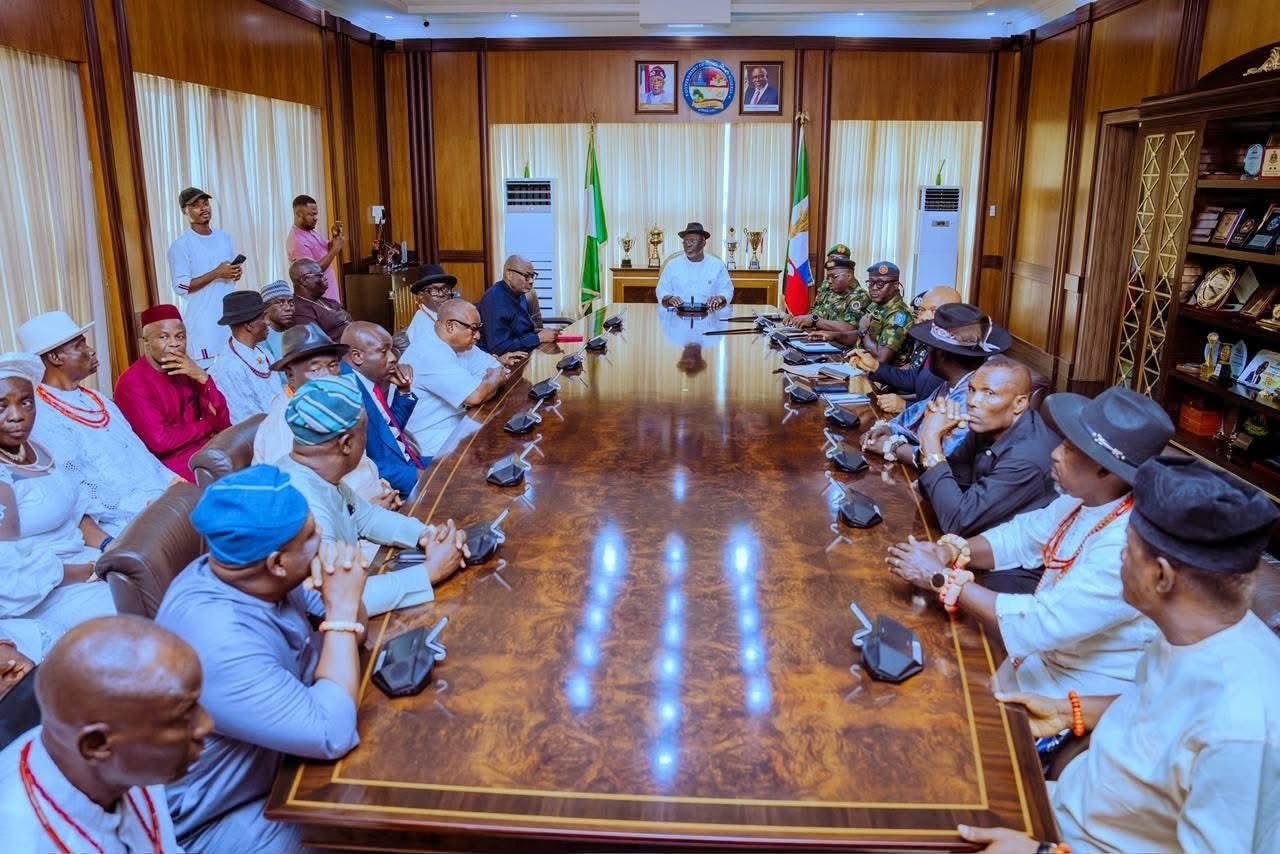
Delta State Governor Sheriff Oborevwori has convened a high level peace meeting with leaders of the Ijaw, Itsekiri and Urhobo nationalities to defuse tensions over the ward and unit delineation exercise in Warri Federal Constituency.
The meeting, held at Government House, Asaba, brought together ethnic leaders, security chiefs and senior government officials and focused on preserving peace and encouraging dialogue amid mounting concern over the delineation process. In a related move, the Delta State Oil Producing Areas Development Commission (DESOPADEC) Indigenous Contractors Forum urged the governor to act swiftly to ease tensions in Warri and its surroundings, warning that renewed conflict could trigger another exodus of international oil companies and a fresh collapse of economic activity in the area.
In a further escalation, hundreds of women, youths and community leaders disrupted operations at about nine flow stations across Warri South West Local Government Area, protesting the non implementation of the delineation exercise approved by the Independent National Electoral Commission. The protesters said they would not leave the facilities until their grievances were addressed, threatening to shut down stations that together produce about 120,000 barrels of oil per day, a move capable of denting national revenue. They barricaded access to key facilities and insisted that production would remain halted until the delineation was fully implemented.
At the peace parley, Oborevwori stressed the need for unity and peaceful coexistence, noting that peace and security were central to his administration’s MORE Agenda. He said the stakeholders had pledged to honor a peace accord and that Warri was one family with no dispute that could not be resolved through dialogue.
Speaking for the Ijaw nationality, Chief Godspower Gbenekama thanked the governor and assured Deltans that no Ijaw man would attack any Itsekiri community. Representing the Urhobo, Olorogun Victor Okumagba acknowledged the recent threats to peace and confirmed that all parties had agreed to sheath their swords. On behalf of the Itsekiri, Chief Ayirimi Emami said his people had come with their position but would return home to relay the governor’s call for peace. The meeting closed with a collective commitment by the three nationalities to uphold peace and dialogue.
The reconciliation followed weeks of escalating threats among the three groups over the INEC delineation proposal, with each reportedly warning of violence if the final outcome failed to meet its expectations. The DESOPADEC contractors forum, in a statement signed by its chairman, Engr. Ogie Samson, and secretary, Prince Charles Ebigbagha, condemned the threats of violence and urged INEC to examine the history of political ownership in the affected areas to prevent future conflict.
Protesters carried placards reading “INEC: Implement Warri Delineation Report,” “Court Ordered Judgment on Wards and Polling Units Delineation,” and “No Implementation, No Production,” and gathered around the Abiteye, Otunana, Jones Creek, Egwa I, Odidi 1 and 2, Batan, Ogbanabou and Egwa 2 flow stations. Chief Maria Ebike, speaking for the protesters, accused INEC of deliberately delaying implementation despite completed consultations, vowing that there would be no oil production without action. Another community leader, Mrs. Fanty Goodness Owotorufa, said the communities remained peaceful but were determined to see the delineation report implemented in line with a Supreme Court judgment.