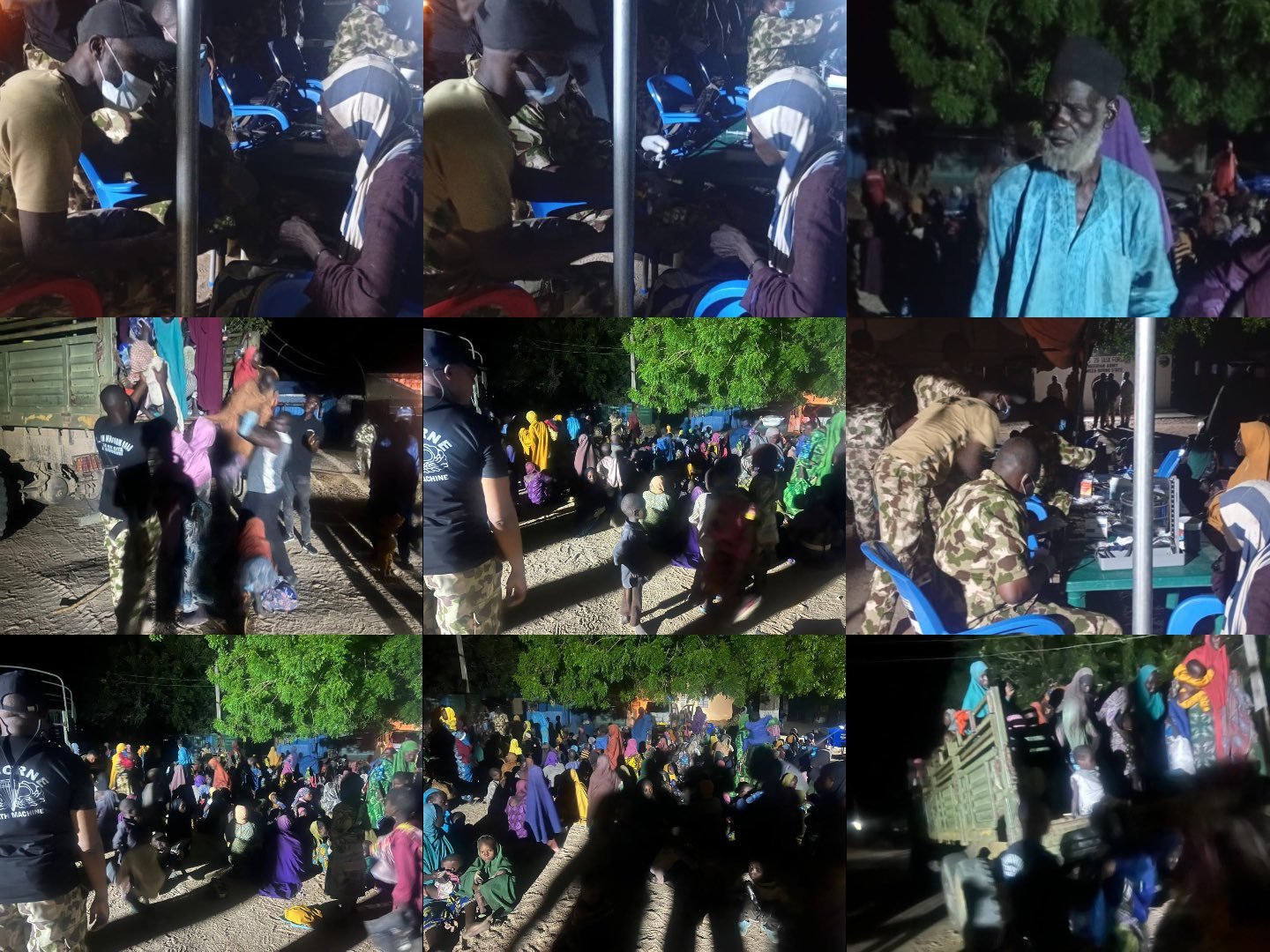
Troops of the Joint Task Force (North East), Operation Hadin Kai (OPHK), have rescued 360 abductees from a heavily fortified stronghold of Jama’atu Ahlis Sunna Lidda’awati wal-Jihad (JAS) in the Mandara Mountains area of southern Borno State.
The military described the operation as one of the most significant hostage rescue missions conducted in the North-East in recent years, highlighting the growing effectiveness of intelligence-led counterterrorism operations in the region.
According to military authorities, the operation was carried out by Special Forces and troops of Sector 1 following weeks of intelligence gathering, covert surveillance and detailed operational planning.
The rescued victims, comprising men, women and children, were reportedly held in captivity under difficult conditions after being abducted from several communities, particularly around the Ngoshe axis of Borno State.
Military sources said the mission was launched after credible intelligence from multiple sources identified the exact location of the hostages and uncovered an extensive insurgent support network sustaining the enclave.
To prepare for the operation, intelligence personnel conducted an extensive target-development process involving the integration of Human Intelligence (HUMINT), Signals Intelligence (SIGINT), and Intelligence, Surveillance and Reconnaissance (ISR) assets, including unmanned aerial systems and long-range reconnaissance patrols.
The intelligence-gathering effort enabled commanders to build a detailed understanding of the terrain, insurgent positions, defensive structures, movement patterns and the condition of the hostages, significantly reducing the risks associated with the rescue mission.
Military authorities disclosed that a major breakthrough was achieved through the successful infiltration of the terrorist network by intelligence assets working under the supervision of OPHK personnel.
The assets reportedly provided timely information on the exact locations of the abductees, the deployment of insurgent commanders, security arrangements within the enclave and planned movements of the hostages.
In addition, coordinated information and psychological operations were said to have created confusion and mistrust among the insurgents, weakening their cohesion and disrupting command-and-control structures ahead of the assault.
The military said the intelligence advantage provided troops with a high level of situational awareness, enabling them to shape the operational environment and execute the rescue operation successfully.
The rescue is being viewed as a major boost to ongoing efforts by Operation Hadin Kai to dismantle terrorist networks, secure communities and protect civilians across the North-East region.
Authorities have yet to provide further details on the condition of the rescued victims or whether any insurgents were captured or neutralised during the operation. However, the military described the mission as a testament to the effectiveness of intelligence-driven operations in the fight against terrorism in Nigeria.