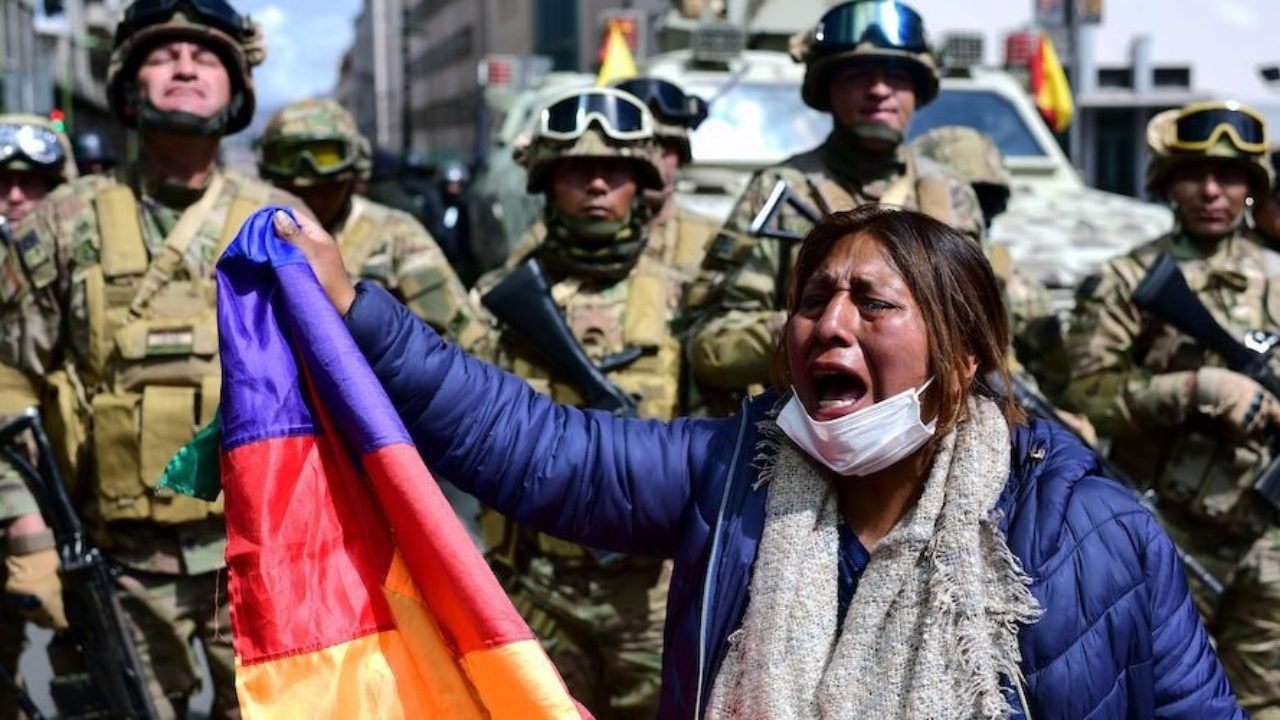
Bolivia’s President Rodrigo Paz has moved to strengthen the role of the military in responding to widespread anti-government protests that have paralysed major cities, triggered shortages and deepened political instability in the country.
Speaking on Wednesday during the swearing-in of a new defence minister, Paz said his administration had prepared a bill that would expand the army’s powers to help restore order amid escalating demonstrations and road blockades.
The proposed legislation, he said, is aimed at reinforcing state institutions and ensuring security forces can act more decisively in the face of unrest.
“The bill is intended to strengthen the institutions… to strengthen our armed forces in their actions,” Paz said.
The announcement comes as Bolivia grapples with weeks of protests that have severely disrupted supply chains, leaving food, fuel and essential goods in short supply. In La Paz on Wednesday, long queues formed outside markets as residents struggled to access basic commodities such as chicken.
“If I were him, I’d pack my suitcase and leave. As Bolivians, they are killing us already,” said Elvira Laura Quispe, one of those waiting in line. “This damned government has no heart.”
Paz, who assumed office just over seven months ago after an election that ended two decades of left-wing rule, has faced mounting opposition over sweeping economic reforms, including cuts to fuel subsidies. His government has also restored diplomatic ties with the United States as part of a broader policy shift.
However, the reforms have triggered fierce resistance, culminating in a month-long wave of protests and road blockades that have brought parts of the country to a standstill. Authorities say nearly 100 blockades are currently active nationwide, contributing to shortages of food, medicine and fuel.
At least seven deaths have been recorded during the unrest, with officials saying some victims were unable to access timely medical care due to blocked roads.
Political pressure on the administration has intensified further following the resignation of the defence and education ministers this week.
The new defence minister, Ernesto Justiniano, said the government’s immediate priority is to restore normality while keeping channels open for dialogue.
“Dialogue is always open, but those who refuse to engage in dialogue cannot be allowed to paralyze the country,” he said.
Paz has accused protesters of attempting to destabilise or overthrow his government and has not ruled out declaring a state of emergency, a move that would suspend certain civil liberties including freedom of movement and assembly.
The government has also accused former president Evo Morales of fuelling the unrest. Morales, who led Bolivia from 2006 to 2019 and is currently in hiding from a warrant over allegations of sexual abuse of a minor, has denied wrongdoing and criticised Paz’s leadership, accusing him of pursuing policies aligned with Washington.
“I am totally convinced this rebellion is against the neo-liberal model and the neo-colonial state,” Morales said in a recent interview.
As tensions escalate, Bolivia faces growing uncertainty over whether the government can restore order without further deepening political divisions and public anger.