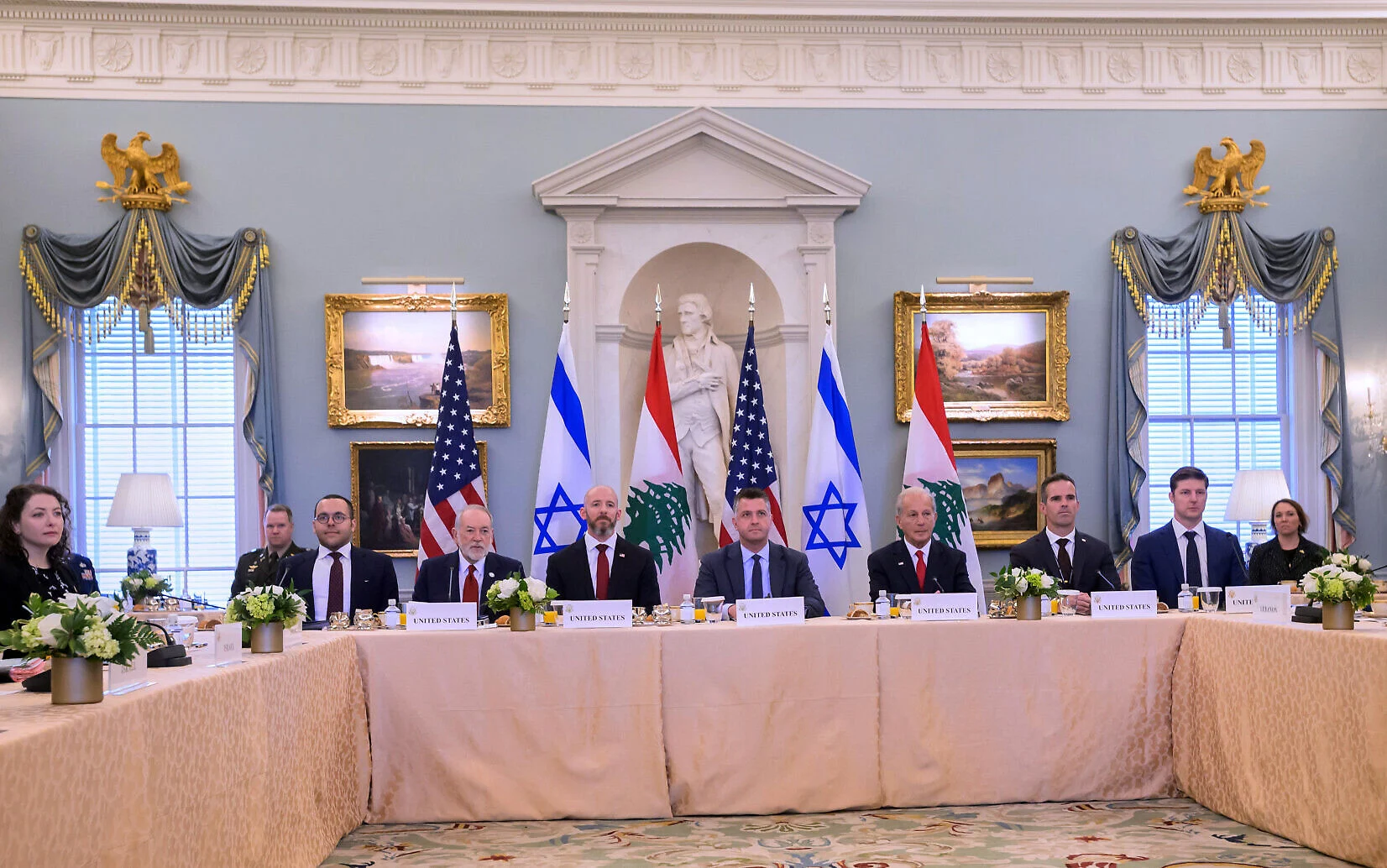
Israel and Lebanon have agreed to implement a conditional ceasefire following US-led talks in Washington, with both sides stressing that the deal depends on a “complete cessation” of fire by Hezbollah, according to a joint statement issued Wednesday.
The agreement marks a new attempt to de-escalate months of intense cross-border fighting between Israel and the Iran-backed armed group Hezbollah, which escalated on March 2 after renewed hostilities in the region.
Under the proposed arrangement, both parties also agreed to establish “pilot zones” in southern Lebanon where the Lebanese Armed Forces would assume exclusive security control, excluding all non-state armed actors.
The statement followed a fourth round of direct diplomatic discussions held in Washington between Lebanese and Israeli representatives, facilitated by the United States.
However, the agreement came despite continued violence on the ground. Earlier on Wednesday, Hezbollah said it targeted Israeli troops, while Israeli airstrikes in southern Lebanon reportedly killed at least 10 people, according to local reports.
Shortly after the announcement, air raid alerts were triggered in northern Israel after what authorities described as a “suspicious aerial target,” though no casualties were reported.
Ceasefire Conditions and Ongoing Hostilities
The joint statement said the ceasefire remains contingent on Hezbollah fully halting attacks and withdrawing operatives from southern Lebanon. Both sides are expected to reconvene for further negotiations during the week of June 22, with the aim of reaching a more comprehensive settlement.
Earlier in the day, US President Donald Trump indicated that Washington preferred to separate negotiations over Lebanon from broader regional discussions involving Iran. However, Iranian officials have maintained that the conflicts are interconnected, with Tehran warning of wider escalation if Israel intensifies strikes on Beirut.
Lebanese authorities said Israeli forces intercepted drones and projectiles launched from Lebanon on Wednesday, while Hezbollah said its fighters carried out retaliatory rocket attacks on Israeli positions, citing violations of the proposed ceasefire framework.
The group also reported additional strikes targeting Israeli military positions in southern Lebanon, including near Al-Qantara and Chqif Castle.
Civilian and Medical Casualties Reported
The Lebanese state-run National News Agency (NNA) reported multiple Israeli strikes across southern Lebanon, including an attack on a vehicle along a main highway outside Beirut.
Lebanon’s health ministry said several civilians were killed in strikes on southern towns, including Syrians and Palestinians in Al-Hawsh near Tyre, though Israeli officials said they were unaware of the incident.
In separate attacks, ambulances and emergency responders were reportedly struck, killing paramedics affiliated with rescue organisations linked to Hezbollah and allied groups. The health ministry said at least 130 emergency and medical workers have been killed since the conflict began.
Lebanon’s army also confirmed the death of one soldier and injuries to two others in Israeli strikes, condemning what it described as the “deliberate targeting” of military personnel and assets.
Uncertain Path to Lasting Truce
A previous ceasefire agreement intended to halt fighting in April has yet to take effect, with both Israel and Hezbollah accusing each other of repeated violations.
While the latest deal introduces new diplomatic momentum, continued hostilities on the ground underscore the fragility of any potential truce and the challenges ahead in achieving a sustained peace agreement.