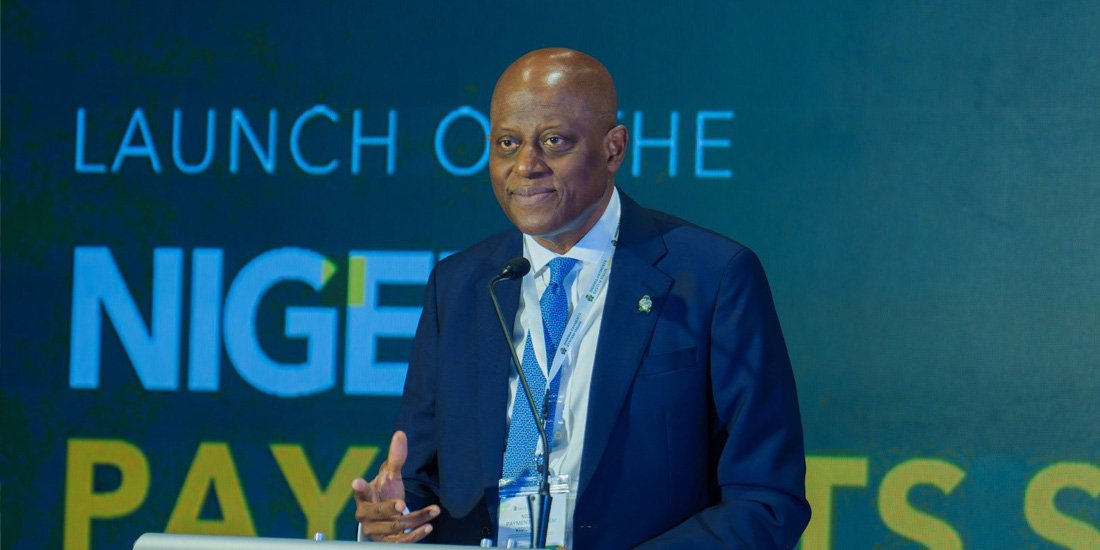
Central Bank of Nigeria Governor Olayemi Cardoso has launched the Payments System Vision 2028, a comprehensive reform framework targeting 95 percent financial inclusion by 2028, near-instantaneous digital transactions, and a drastic reduction in electronic fraud losses, while setting Nigeria on a path to becoming a globally competitive fintech producer and exporter.
Speaking at the launch ceremony in Abuja, Cardoso described the payment infrastructure Nigeria was building as invisible roads that move money, stressing that efficient payment systems were now as central to economic growth, competitiveness, and poverty reduction as physical infrastructure. He warned against the country’s long-standing pattern of policy disruption, saying that consistency in execution rather than the quality of documentation would determine whether the vision achieved its targets.
He said a central objective of PSV 2028 was to bring an additional 15 million Nigerians, including market women, farmers, and young people, into the formal financial system, lifting the national inclusion rate from its current level to 95 percent by 2028. He said digital financial access must become universal and that cash could no longer be allowed to define whether a citizen participated in the economy.
On fraud, Cardoso set a target of reducing losses to below 0.001 percent of total transactions by 2028, to be achieved through deeper integration of the National Identification Number and Bank Verification Number systems combined with artificial intelligence-driven fraud detection tools. He said trust was central to digital finance and that without confidence in the system, inclusion gains could stall even where infrastructure was in place.
He said open banking reforms had already unlocked more than 100 Application Programming Interfaces, creating opportunities for innovation, new products, and financial services expansion. He urged Nigerian innovators to build global fintech solutions from Lagos, Abuja, and Kano using domestic data and infrastructure, and said the country must move from being a fintech adoption market to a fintech production and export economy.
CBN Deputy Governor for Economic Policy Dr. Muhammad Sani Abdullahi said PSV 2028 was anchored on five mutually reinforcing pillars: infrastructure, inclusion, innovation, cross-border payments, and system integrity. He said the vision aligned with the African Continental Free Trade Area, positioning Nigeria as a regional payments hub for trade and investment, and that success would be measured by productivity gains, job creation, investment levels, and long-term prosperity.
CBN Director of Payments System Policy Jimoh Itopa Musa said the country’s financial inclusion journey had been shaped by efforts to address three key barriers: access, complexity, and trust. He noted that Nigeria now had approximately two million banking agents nationwide, describing them as small business owners who had expanded financial service access in underserved communities, and said PSV 2028 represented the next phase of reform focused on efficiency, security, innovation, and deeper financial penetration.
The launch was attended by Chief Executive of Sterling Bank Abubakar Suleiman, Managing Director and Chief Executive of the Nigeria Inter-Bank Settlement System Premier Oiwoh, Securities and Exchange Commission Director-General Dr. Emomotimi Agama, and Managing Director and Chief Executive of Remita Payment Services Deremi Atanda, among other senior financial sector officials.