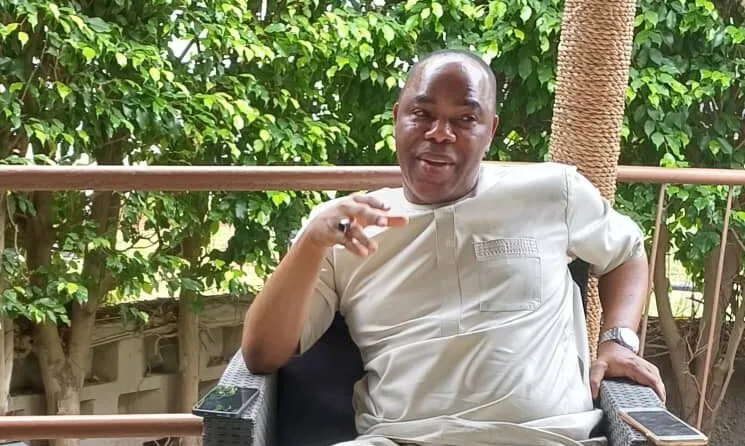
A High Court of the Federal Capital Territory has granted bail to former Chairman of Skye Bank Plc, Tunde Ayeni, in the sum of N200 million over alleged fraud charges filed against him by the Economic and Financial Crimes Commission.
Ayeni is currently facing a 17-count charge bordering on the alleged diversion of N15.7 billion.
The defendant pleaded not guilty to all charges when he was arraigned before Justice Jude Onwuzuruike on Monday.
Following his plea, Ayeni’s counsel, Dele Adesina, SAN, applied for bail on behalf of the former bank chairman, while the prosecution counsel, G.I. Inde, opposed the request.
In his ruling, Justice Onwuzuruike held that the primary purpose of bail was to ensure the defendant’s attendance during trial and noted that claims by the prosecution that Ayeni could interfere with proceedings were speculative.
The judge further reiterated the constitutional principle that every accused person is presumed innocent until proven guilty.
As part of the bail conditions, the court ordered Ayeni to provide two sureties in like sum, both of whom must be federal civil servants.
The sureties are also required to submit valid national identity cards, letters of employment and evidence of ownership of properties valued at not less than N500 million.
Additionally, the court directed that one of the sureties must provide an undertaking backed by a bank guarantee worth N15 billion.
Pending the fulfilment of the bail conditions, the court ordered correctional authorities to grant Ayeni adequate access to his legal team.
The EFCC had previously prosecuted Ayeni and Timothy Oguntayo in 2019 over related allegations.
At the time, Ayeni’s counsel, Wole Olanipekun, SAN, argued that the transactions under investigation were commercial banking dealings rather than criminal acts.
Olanipekun maintained that the transactions were legitimate banking arrangements undertaken in the ordinary course of business and that the parties involved had already sought and obtained approval from the Central Bank of Nigeria.
He described the matter as a business dispute that had gone sour and insisted it was suitable for amicable settlement rather than criminal prosecution.
The parties later agreed to resolve the matter out of court, with the terms of settlement reportedly reflecting arrangements earlier approved by the Central Bank of Nigeria before the EFCC investigation commenced.