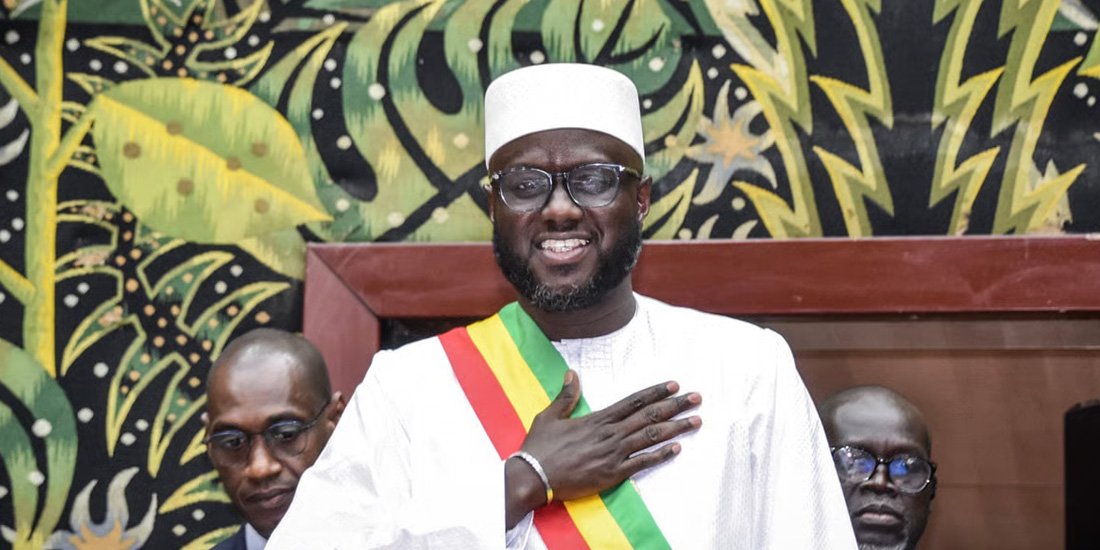
The speaker of Senegal’s parliament, El Malick Ndiaye, announced his resignation on Sunday, intensifying the political turmoil that erupted following the dismissal of Prime Minister Ousmane Sonko two days earlier.
Ndiaye’s departure is expected to pave the way for Sonko to seek the position of parliamentary speaker, a powerful role within the National Assembly where the ruling Pastef party commands a strong majority.
The latest developments could further complicate governance efforts for President Bassirou Diomaye Faye, who removed Sonko from office on Friday after months of mounting tensions between the two former allies.
In a statement posted on Facebook, Ndiaye described his resignation as “a personal choice, guided above all by my notion of institutions, public responsibility and the greater interest of the nation.”
The presidency has yet to announce a replacement for Sonko or provide details on the formation of a new government.
Faye’s rise to power was closely tied to Sonko, the influential opposition figure who was widely seen as the driving force behind Pastef’s electoral success in 2024. Sonko was unable to contest the presidential election himself due to a defamation conviction, leading to Faye emerging as the party’s candidate.
The Pastef administration swept into office promising sweeping reforms, anti-corruption measures and economic recovery for a country grappling with heavy debt and public frustration.
However, relations between Faye and Sonko had deteriorated in recent months, with public disagreements exposing fractures within the ruling alliance.
Sonko had openly criticised the president, accusing him of a “failure of leadership” and alleging he lacked support in the face of growing criticism from political opponents.
His dismissal came shortly after he strongly condemned what he described as efforts by Western nations to “impose” homosexuality on African societies. Sonko made the remarks following the passage of legislation aimed at strengthening penalties for same-sex relations in Senegal.
The unfolding crisis has raised concerns over political stability in the West African nation less than two years after Pastef’s landmark electoral victory.