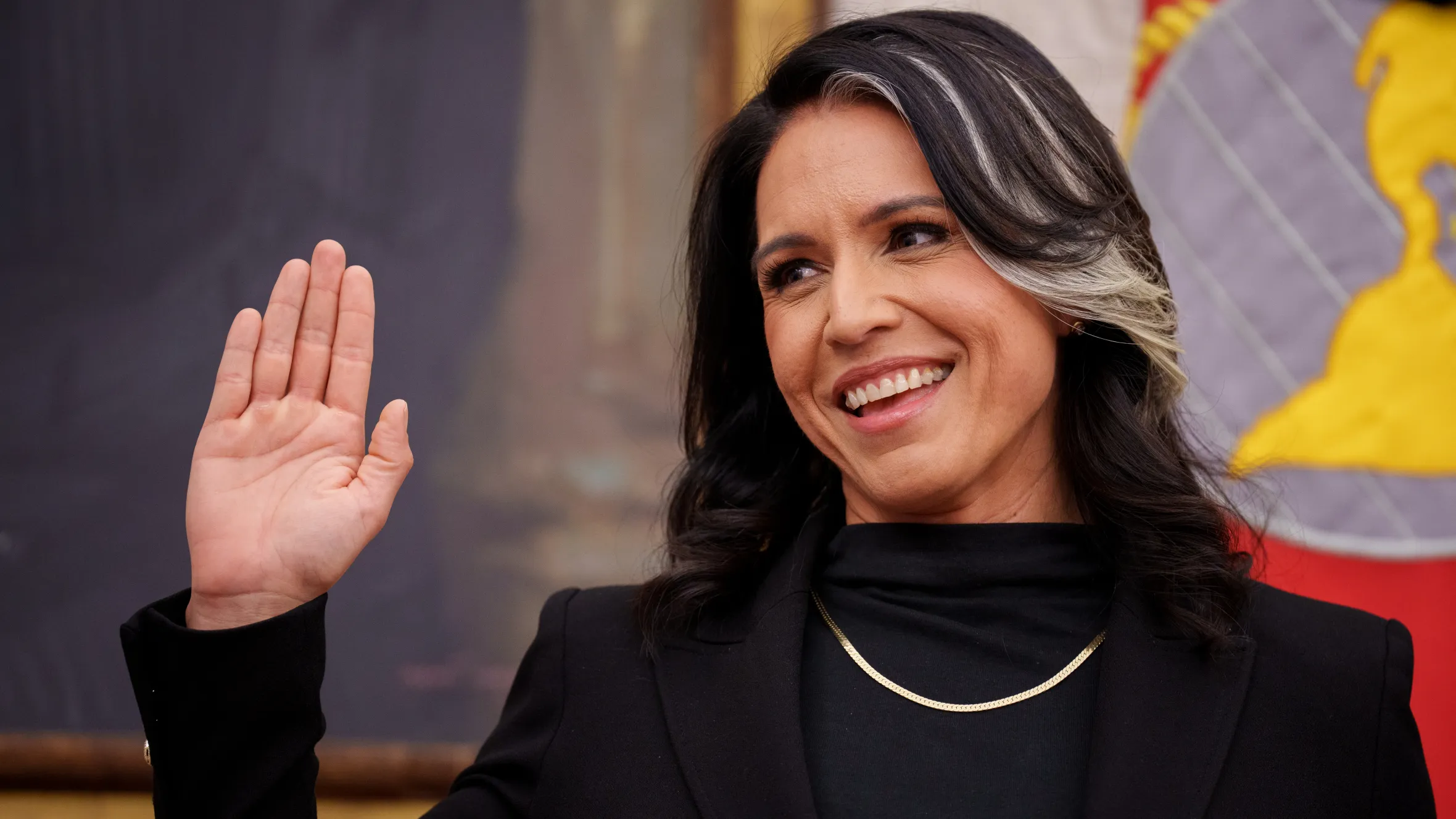
Tulsi Gabbard has resigned as Director of National Intelligence in the administration of Donald Trump, citing her husband’s serious health condition as the reason for stepping down.
Gabbard, 45, announced her resignation on Friday in a letter addressed to President Trump and shared on social media platform X.
According to her, her husband, Abraham Williams, was recently diagnosed with an extremely rare form of bone cancer and would require her full support during treatment and recovery.
“At this time, I must step away from public service to be by his side and fully support him through this battle,” she wrote.
President Trump praised Gabbard for her service, describing her tenure as “incredible” and expressing support for her decision to focus on her family.
The president also announced that her deputy, Aaron Lukas, would serve as acting Director of National Intelligence pending a permanent appointment.
Gabbard’s departure marks another high-profile exit from the Trump administration in recent months.
The former Democratic congresswoman was considered an unconventional choice for the intelligence role due to her previous criticism of US military interventions and positions that often differed from mainstream Republican foreign policy views.
During her time in office, Gabbard reportedly clashed with elements within the administration over issues related to the conflict involving Iran.
She had publicly questioned claims that Iran posed an imminent threat to the United States and reportedly maintained that intelligence assessments did not support assertions that Tehran was rebuilding nuclear enrichment facilities allegedly destroyed during joint US-Israeli strikes earlier in the year.
Gabbard also faced scrutiny over her past 2017 visit to Bashar al-Assad in Syria and allegations by critics that she echoed Russian narratives regarding the war in Ukraine.
Despite the controversies, Trump defended her appointment and retained confidence in her leadership throughout much of her tenure.
Born in Hawaii, Gabbard served in Iraq with the Army National Guard, an experience that shaped her opposition to prolonged US military engagements overseas.
She previously represented Hawaii in Congress and was known for her independent political positions and outspoken foreign policy views.