The Lagos State Government has rolled out new health financing, workforce and infrastructure reforms aimed at making health insurance mandatory for all residents and reversing outbound medical tourism, officials said Tuesday.
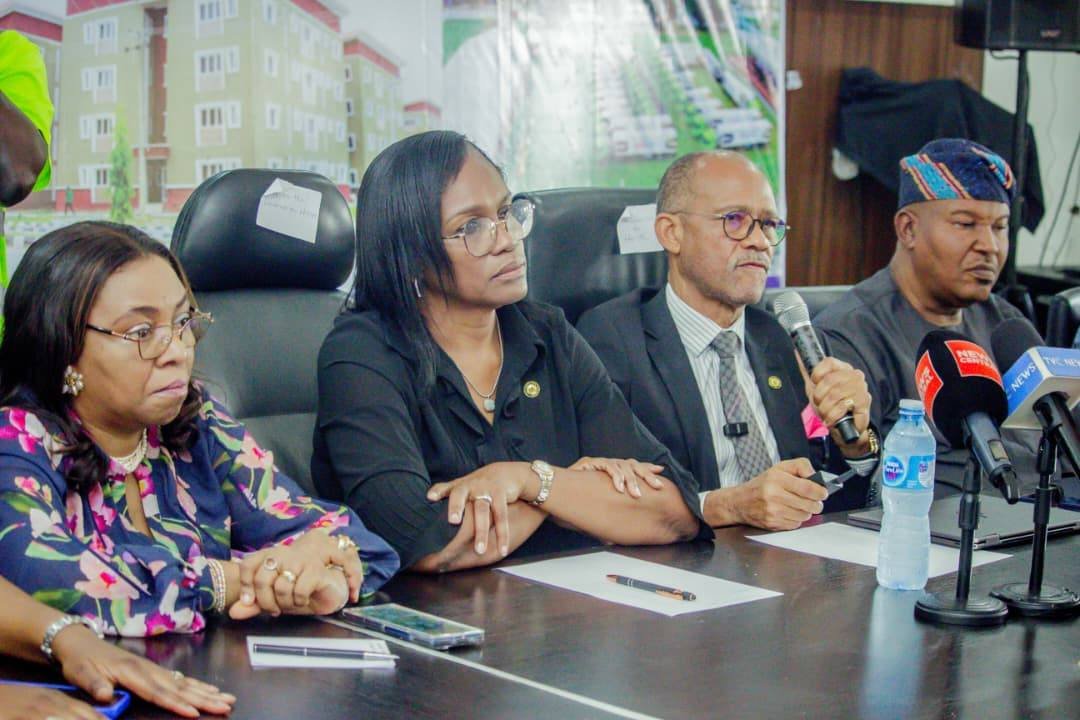
Speaking at the Year 2026 Ministerial Press Briefing at the Bagauda Kaltho Press Centre, Alausa-Ikeja, Commissioner for Health Prof. Akin Abayomi said the state is working to close an estimated N100 billion gap between current health sector funding and projected needs.
Lagos currently allocates about 8% of its budget to health, well below the 15% benchmark set by the Abuja Declaration, Abayomi said. With donor support dwindling and demand rising in the megacity, he said alternative financing through mandatory insurance and stronger public-private partnerships had become “imperative.”
Mandatory Insurance Enforcement Begins
Governor Babajide Sanwo-Olu domesticated the National Health Insurance Authority Act through an Executive Order signed July 16, 2024, making health insurance compulsory for all Lagos residents, Abayomi said.
Ministries, Departments and Agencies have started enforcing the policy by requiring residents seeking government services to show proof of accredited health insurance coverage.
The move is expected to boost enrollment and create a sustainable funding pool for facilities, infrastructure upgrades and equity support for vulnerable groups.
More than 1.46 million residents are currently enrolled in the Lagos State Health Management Agency’s Ilera-Eko scheme. Still, Abayomi noted the state has “a long way to go” to reach universal health coverage. About 77% of healthcare spending in Nigeria comes directly from citizens’ pockets, with only 2% financed through insurance — a situation he called “unsustainable and anomalous.”
2052 Vision: End Medical Tourism
The reforms tie into Lagos’ 2052 Development Plan, which aims to make the state one of Africa’s top three healthcare destinations within the next decade. Priorities include universal health coverage, lower maternal mortality, stronger primary healthcare, better child nutrition and ending outbound medical tourism.
“We do not want Lagosians travelling abroad to seek healthcare in Dubai, London, India or South Africa. We want to provide every speciality and subspecialty needed right here in Lagos,” Abayomi said.
The state also plans to regulate and integrate informal providers — including community pharmacies, patent medicine vendors and traditional medicine practitioners — into the wider healthcare system. Lagos has over 3,500 registered private health facilities, with many residents relying on informal providers as their first point of care.
Workforce and Infrastructure Push
To address health worker shortages and migration, Lagos has approved a stand-alone University of Medicine and Health Sciences to train more doctors, nurses, pharmacists and other professionals. The institution will decentralize clinical training across primary, secondary and private facilities and draw on diaspora specialists.
Ongoing infrastructure redesign projects across health facilities aim to improve patient experience, staff welfare and overall outcomes, Abayomi added.
A recent strategic retreat with the Ministry of Health, Primary Health Care Board and Local Government Chairmen produced a performance-based compact to improve coordination across all tiers. It focuses on role clarity, resource disbursement, digital health integration, workforce planning and primary care delivery.
HEFAMAA Calls for Public Vigilance
Special Adviser to the Governor on Health, Dr. Kemi Ogunyemi, said the Health Facility Monitoring and Accreditation Agency (HEFAMAA) remains central to patient safety. Lagos was the first state to create a dedicated agency for healthcare facility regulation, a model now being studied by other states and the Federal Government.
With more hospitals, cosmetic medical spas and clinics opening, Ogunyemi said HEFAMAA is partnering with franchise organizations and trained professionals to support monitoring.
“If you do not see the HEFAMAA accreditation sign in a facility, please do not use that facility. If you see something concerning poor and substandard practice, say something. We rely on the public to help us ensure patient safety,” she said.
Backing for Health Workers
Permanent Secretary, Ministry of Information and Strategy, praised progress in emergency response, infrastructure and primary care. Permanent Secretary, Ministry of Health, Dr. Dayo Lajide, thanked Governor Sanwo-Olu for continued investment in the sector and commended health workers for their resilience amid rising demand.
The briefing was part of activities marking the seventh year in office of Governor Sanwo-Olu and Deputy Governor Kadri Obafemi Hamzat.