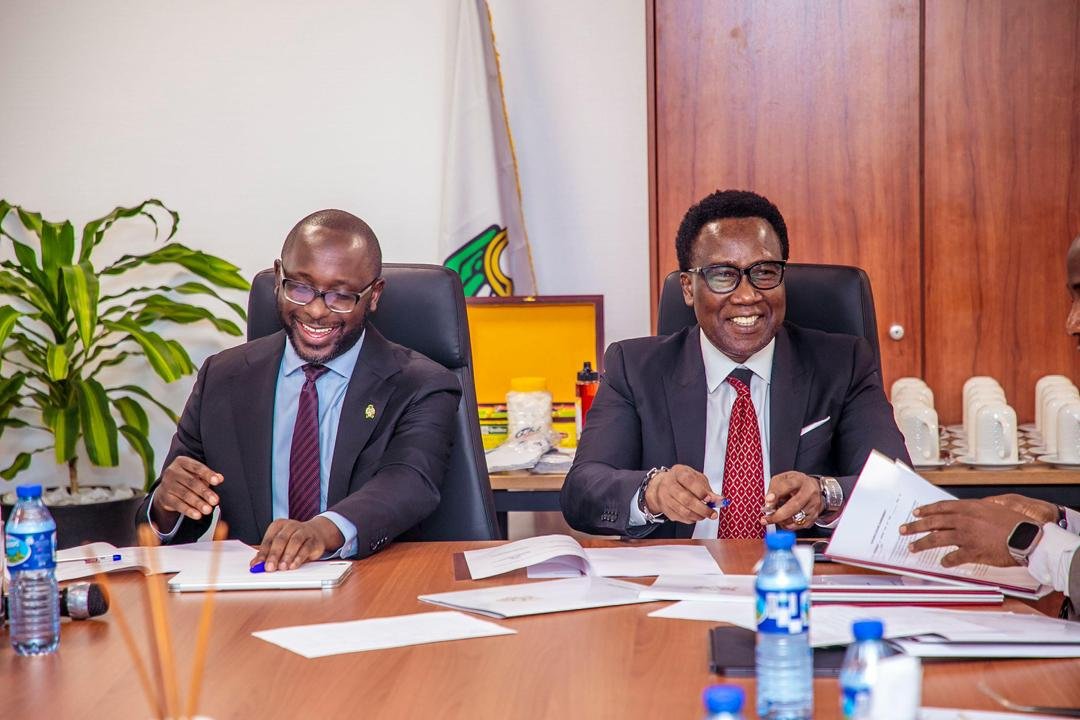
The Nigerian Meteorological Agency and the Central Bank of Nigeria have signed a Memorandum of Understanding on data sharing, formalising a partnership that will integrate weather and climate information into the CBN’s economic research and policy advisory functions across agriculture, energy, transportation, and inflation monitoring.
NiMet Director-General Professor Charles Anosike, speaking at the signing ceremony in Abuja, cited evidence from the World Bank indicating that extreme weather driven by climate change was significantly affecting global food security, with over 87 million people facing hunger in East and Southern Africa and 52 million in West and Central Africa. He said the collaboration aligned with the Tinubu administration’s agricultural priorities including the cultivation of 10 million hectares of farmland, and noted a Berkeley Earth projection that 2026 was likely to be the fourth warmest year on record.
CBN Deputy Governor for Economic Policy Muhammad Abdullahi described the agreement as a critical step toward strengthening evidence-based policy at a time when timely and reliable data were essential for effective decision-making. He said NiMet data was particularly important for inflation monitoring, agricultural sector assessments, and the broader economic policy advisory functions of the Economic Policy Directorate.
Both officials described the MOU as an example of institutional partnership that strengthened the quality of Nigeria’s national data systems and reinforced the connection between climate intelligence and macroeconomic planning.