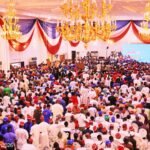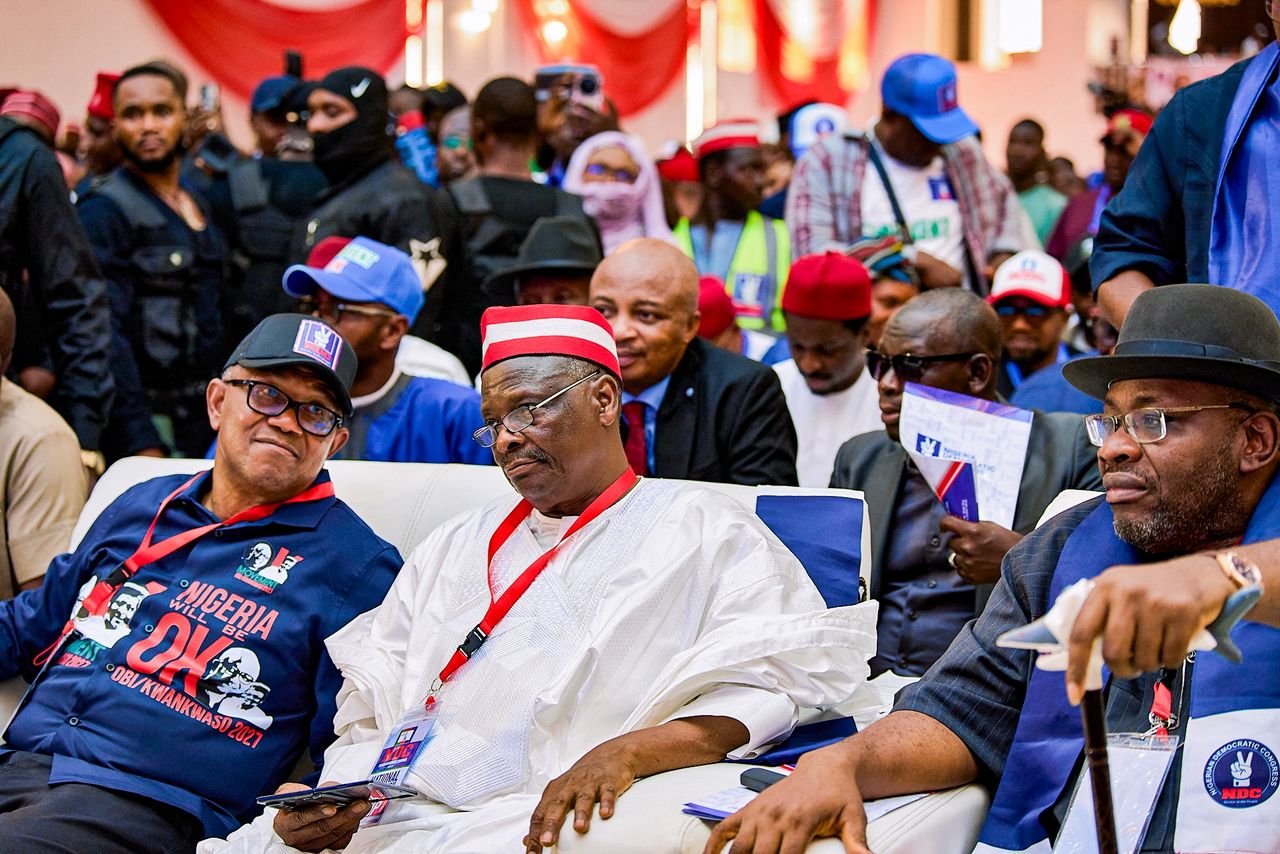
The Nigeria Democratic Congress (NDC) on Saturday formally zoned its 2027 presidential ticket to Southern Nigeria, in a major political decision that positions former Anambra State Governor, Peter Obi, as a leading contender for the party’s presidential nomination.
The resolution was unanimously adopted at the party’s maiden national convention held in Abuja, where delegates also agreed that the presidency would rotate back to Northern Nigeria in 2031 after a single four-year term in the South. Party leaders described the arrangement as a deliberate effort to promote equity, national cohesion, and political stability.
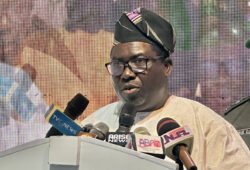
The zoning motion was moved by Hon. Afam Victor Ogene, who represents Ogbaru Federal Constituency in the House of Representatives. He said the decision reflected the party’s commitment to fairness and inclusiveness in national leadership.
“In recognition of our country’s diversity and the need for balance, the party has resolved that the presidency shall rotate to the South in 2027 for a single term and subsequently return to the North in 2031,” Ogene said, drawing applause from delegates.
The development is widely seen as paving the way for Peter Obi’s potential emergence as the party’s presidential candidate, although the former governor has not formally declared his candidacy under the NDC platform.
Speaking at the convention, Obi said the coalition behind the party was driven by principle rather than political convenience, adding that the goal was to reposition Nigeria away from poverty, insecurity, and poor governance.
“We are not changing political platforms for transactional reasons. We are making a principled decision to find a platform that allows us to build a new Nigeria that is possible,” he said.
Obi warned against what he described as attempts to weaken opposition politics in the country, insisting that Nigeria must remain a multiparty democracy ahead of the 2027 general elections.
He also lamented Nigeria’s socio-economic conditions, stating that over 140 million citizens were living in multidimensional poverty while many young people remained unemployed or underemployed.
“Nigeria is not a poor country; it is a country rooted in poverty by poor leadership,” he said, adding that the NDC would prioritise a shift from a consumption-based economy to a production-driven one.
Obi further pledged that, if elected, the party would focus on national unity, security, job creation, and economic recovery.
“We want a Nigeria where citizens are safe, whether in Kano, Katsina, Kebbi, Sokoto, Benue, Rivers, or anywhere else in the country,” he said.
Meanwhile, reactions have continued to trail the zoning decision, with the National Chairman of the All Progressives Congress (APC), Prof. Nentawe Yilwatda, and the Chairman of the Progressive Governors’ Forum, Gov. Hope Uzodimma, stating that the NDC and the African Democratic Congress (ADC) do not pose an electoral threat to the ruling party.
Former Kano State Governor, Dr. Rabiu Kwankwaso, however, welcomed the NDC zoning arrangement, describing it as a step toward fairness in Nigeria’s political structure.
The NDC’s decision is expected to reshape early political calculations ahead of the 2027 general elections and intensify discussions around zoning, coalition politics, and opposition realignments.