US Defense Secretary Pete Hegseth launched a stinging attack on America’s traditional European and Asian allies for refusing to commit naval forces to forcibly reopen the Strait of Hormuz, describing the US-led war against Iran as a gift to the world from President Donald Trump while threatening that the era of allies benefiting from American protection without reciprocal commitment was definitively over.
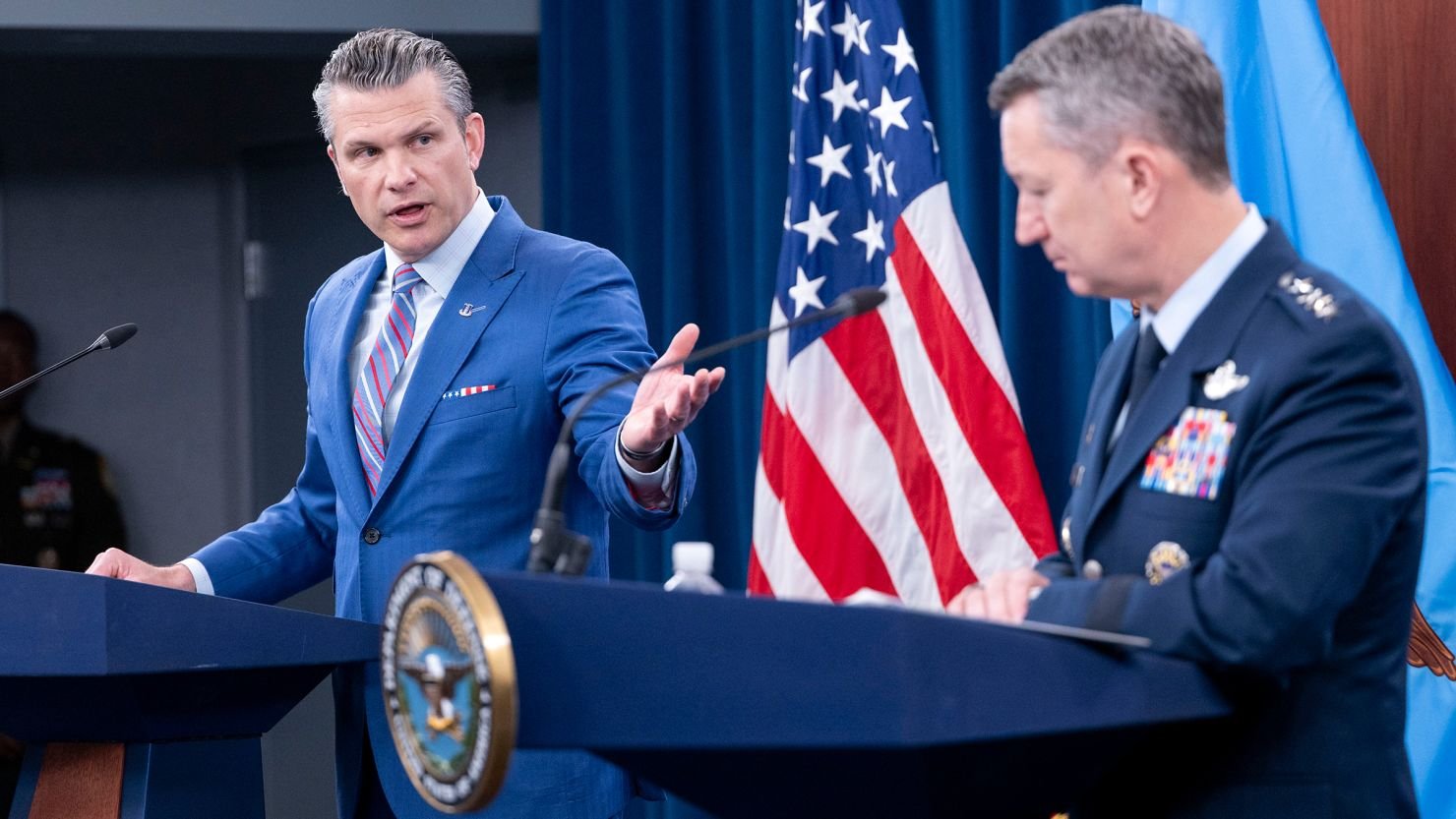
Speaking at a Pentagon briefing alongside Joint Chiefs of Staff Chair General Dan Caine, Hegseth claimed that the US Navy’s blockade on Iranian ports would tighten globally and hourly, preventing any Iranian ships from entering or leaving Iranian territorial waters without American authorisation. He simultaneously accused Iranian forces of acting like terrorists by attempting to enforce their own blockade of the Strait of Hormuz and laying mines across the waterway.
“Iran’s battered military has been reduced to a gang of pirates with a flag. They cloak their aggression in slogans, but the world now sees them for what they are, criminals on the high seas. We are in control. Nothing in, nothing out,” Hegseth said.
He directed particular criticism at European nations, arguing that the continent needed the strait far more than the United States and had an obligation to do more than convene diplomatic summits and issue carefully worded statements. His comments were directed specifically at the UK-France summit that brought together 51 countries the previous week.
“Europe and Asia have benefited from our protection for decades, but the time for free riding is over. America and the free world deserve allies who are capable, who are loyal and who understand that being an ally is not a one-way street,” Hegseth said.
He dismissed as inadequate the announcement by British Prime Minister Keir Starmer and French President Emmanuel Macron that both countries would lead a strictly defensive multinational mission to protect merchant vessels and conduct mine clearance operations, describing the initiative as not serious because it excluded offensive operations against Iranian forces.
Against this tense diplomatic backdrop, Iranian Foreign Minister Abbas Araghchi flew to Islamabad for talks with Pakistani officials in what regional observers interpreted as a critical step toward the resumption of direct negotiations with the United States aimed at ending the conflict. Senior Pakistani government officials said there was a high likelihood of a breakthrough, following days of escalating tensions in the strait during which the US captured an Iranian-flagged ship and Iran responded by seizing two other vessels and firing at a third.
The diplomatic path remained complicated by several unresolved disputes, including Iran’s insistence that the United States lift its naval blockade before returning to talks, a demand Trump had so far refused, and by the question of which Iranian delegation would represent Tehran in any resumed negotiations. Iran’s nuclear programme, the future of US sanctions, and the long-term status of the Strait of Hormuz remained the central sticking points threatening to derail Pakistan’s mediation efforts.
Trump extended a temporary ceasefire that had been set to expire, describing himself as in no hurry to reach a deal with Tehran and claiming he had all the time in the world, even as rising oil prices driven by the conflict pushed his domestic approval rating downward ahead of November midterm elections.