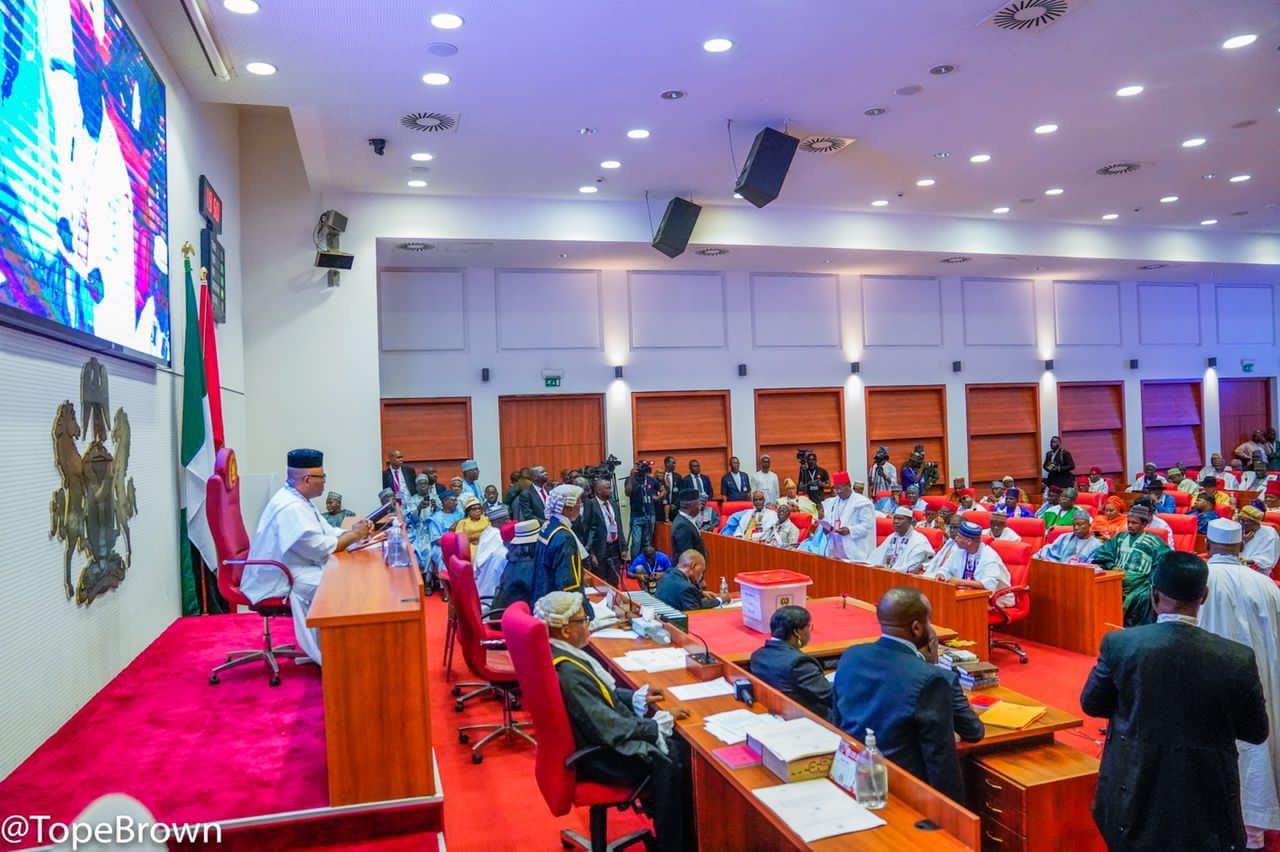
The Senate issued sweeping and urgent directives to Nigeria’s security establishment, ordering a comprehensive military operational audit and a coordinated nationwide manhunt for perpetrators of fresh terrorist attacks that left soldiers and civilians dead in Borno and Benue states, while former Vice President Atiku Abubakar delivered a stinging indictment of the Tinubu administration’s handling of security funding.
The resolutions, adopted after an extensive and emotionally charged debate that included a minute’s silence for fallen soldiers and civilians, reflected mounting alarm within the National Assembly over what lawmakers described as a dangerous resurgence of coordinated attacks threatening to reverse hard-won gains in counter-insurgency operations.
The Senate directed the Chief of Defence Staff and all service chiefs to undertake a full-scale operational and logistical audit of the attacks on military formations in Monguno and Benisheikh in Borno State, identifying critical gaps in equipment, troop readiness, intelligence coordination, and rules of engagement. The chamber also mandated the CDS, Inspector-General of Police, and other security heads to coordinate a determined effort to track and apprehend those responsible for the deadly assaults in Benue State, and called for the immediate deployment of additional troops and new security formations in vulnerable areas.
Leading the debate, Senator Mohammed Tahir Monguno warned that the attacks on Monguno, a key military garrison town, and Benisheikh, a strategic transit hub along the Damaturu to Maiduguri corridor, signaled a deliberate shift in insurgent tactics designed to weaken military strongholds and disrupt critical humanitarian routes.
Minority Leader Senator Abba Moro delivered the most pointed address of the session, urging the federal government to immediately halt ransom payments and end all negotiations with terrorists and bandits, warning that such conciliatory approaches had emboldened criminal groups and contributed directly to the persistence of violence.
“You do not negotiate with terrorists. You do not pay ransoms. You identify them and neutralize them. That is the global standard,” he said, adding that the frequency and brutality of attacks had reached a point where routine official condemnations were no longer remotely adequate responses.
Moro was particularly forceful in criticizing what he described as the reactive posture of security agencies, observing that in many cases personnel arrived at attack sites after the damage had been done, recovering bodies instead of preventing attacks. He pressed for intensified efforts to rescue more than 400 women, children, and elderly persons reportedly held captive in Borno South since early March, describing their continued captivity as an unconscionable humanitarian emergency.
Senator Abdul Ningi proposed the temporary suspension of political activities in states facing persistent violence, arguing that security stabilization must take precedence over electoral preparations. Deputy Senate President Jibrin Barau acknowledged the scale of the challenge but assured that the Tinubu administration was taking steps to strengthen military capacity through increased funding and provision of critical equipment.
Atiku, reacting separately to a media report revealing that the Nigerian Army received only seven percent of its budgetary disbursement for security equipment in 2025, described the figure as a scandalous indictment of an administration paying lip service to Nigeria’s security challenges while soldiers died in the field with inadequate equipment.
“A poorly equipped army can neither protect itself nor the country it is supposed to serve. Incompetence and corruption that cause lack of proper and timely disbursement of funds are the main enemies hindering efforts to address security challenges,” he said.
The Senate mandated its committees on defence, army, police, national security, and intelligence to investigate the attacks and recommend sustainable solutions, and called on the National Emergency Management Agency to provide urgent humanitarian assistance to victims across Benue, Niger, Kwara, and Borno states.