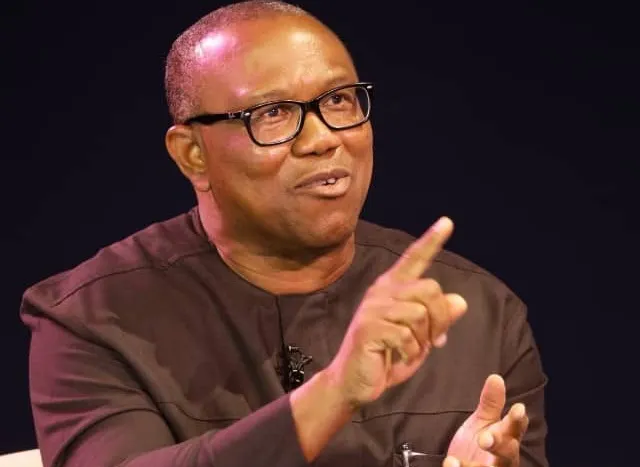
Former Labour Party presidential candidate Peter Obi has mounted a fierce and detailed public attack on the federal government’s spending priorities, arguing that the proposed allocation of N135.22 billion for electoral adjudication and post-election provisions represented not merely a misplaced use of public resources but a fundamental statement of values by an administration that chose to fund political processes while allowing the education system that would determine Nigeria’s future to remain chronically and deliberately underfunded.
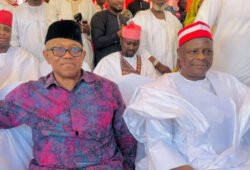
Speaking at a public lecture at Coal City University in Enugu State, Obi described the electoral spending proposal as morally indefensible when placed against the backdrop of a country with one of the largest out-of-school child populations in the world and an education budget that consistently fell far below internationally recommended standards.
He argued that the funds earmarked for post-election processes could be far more productively channelled toward supporting graduates entering a difficult labour market, rebuilding a school infrastructure that had deteriorated across the country, and strengthening a tertiary education system that was producing graduates poorly equipped for the demands of a competitive modern economy.
Obi noted that the proposed 2026 federal education budget of N3.52 trillion represented only approximately 6.1 percent of the total national budget, a figure that compared unfavourably with the UNESCO-recommended benchmark of 15 to 20 percent of total government expenditure and placed Nigeria among the lowest investors in education as a share of government spending anywhere in the world.
He maintained that Nigeria’s chronically poor investment in education was not merely a fiscal failing but a strategic catastrophe that was directly responsible for the country’s persistently high poverty rates, weak human capital development outcomes, poor productivity levels, and the continued loss of educated and talented Nigerians to other countries that offered better conditions and opportunities.
“We have a government that is concerned about building physical infrastructure without human infrastructure. It is human infrastructure that drives development in countries like China and India. Without investing in our people, the roads and buildings we construct will not generate the economic transformation we need,” he said, warning against an approach to development that prioritised the visible and politically convenient over the foundational and strategically essential.
He further lamented that education funding in Nigeria had for many years been among the first casualties of budget pressures, with the education sector consistently bearing disproportionate cuts whenever fiscal conditions tightened, in contrast to more politically sensitive spending categories that remained protected regardless of economic circumstances.